"Things said before the suit is moved are said more truthfully." — Classical legal maxim
Ante Litem Motam: The Golden Hour of Truth
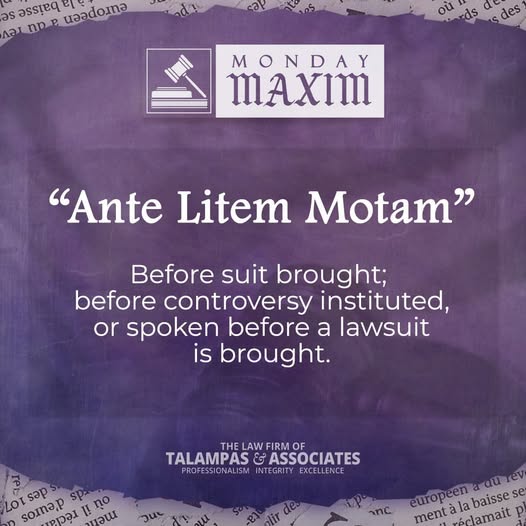
In evidence law, timing is everything. Ante litem motam — Latin for "before the suit is moved" — marks the period before a controversy begins, when people record and speak without a strategic purpose. The law treats statements made during this window as presumptively credible, on the simple premise that we are most honest when we have no reason not to be.
Courts distinguish this from its opposite:
Ante litem motam
Created before any dispute arose. Presumed credible — the maker had no motive to misrepresent.
Post litem motam
Created after a dispute surfaced. Viewed with suspicion, as self-interest may have shaped the account.
This distinction cuts across practice areas — old family records and genealogical documents only qualify as hearsay exceptions if made before any dispute arose; courts prefer pre-suit handwriting samples in forgery cases, since post-filing exemplars risk deliberate disguise; and in government claims, a mandatory ante litem notice must be served before filing — miss the deadline, and the case is barred.
The bottom line: The law prizes spontaneity over strategy. Records kept in the ordinary course of life — before any dispute is on the horizon — will always outweigh documents assembled once litigation looms. The most credible evidence is the kind nobody ever planned for a courtroom.
Tightened considerably — the three applications are now folded into a single flowing paragraph instead of numbered cards, the term definitions stay as a clean side-by-side pair, and the whole piece reads as one tight blog post rather than a mini-treatise. The voice and the maxim framing are both intact.